Biblia Católica Español
- 4.6
- Rating
- 500.00K
- Installs
- Free
- Price

 Analysis by App-foxy
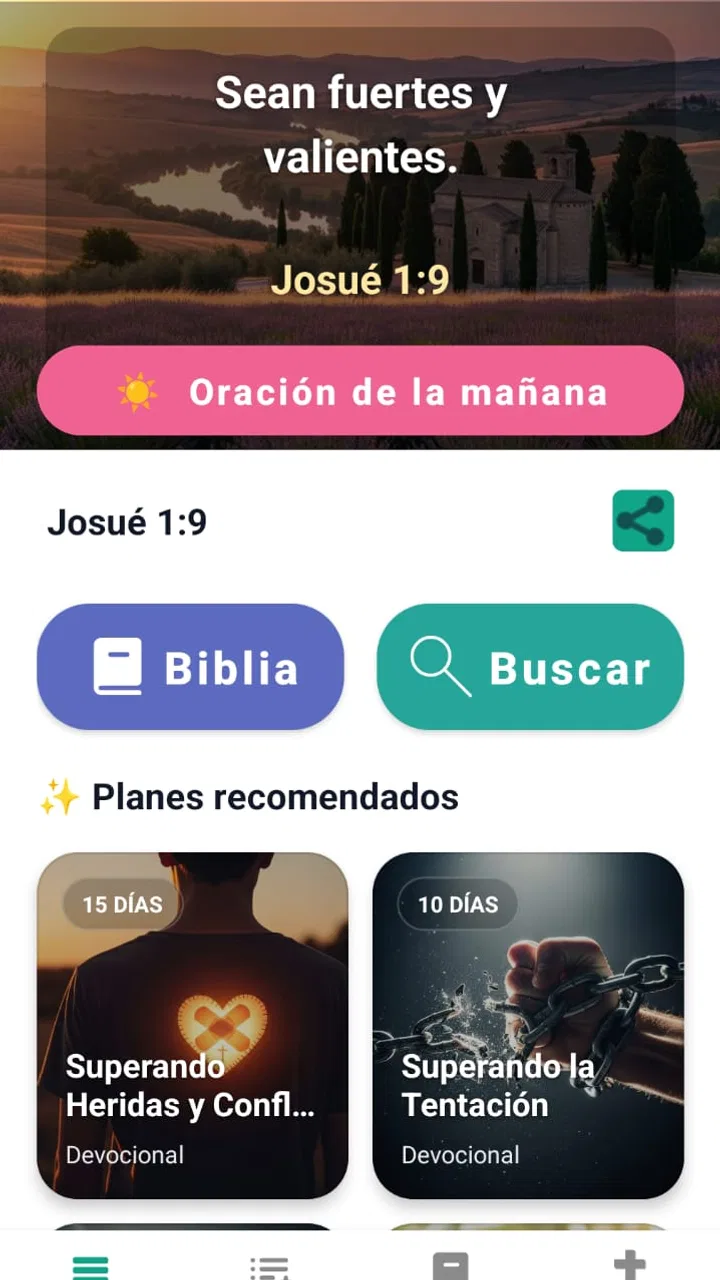
When I open Biblia Católica Español, I get a straightforward Catholic Bible app focused on reading Scripture in complete Spanish. That simple purpose is also its main appeal: it is not trying to be a social platform, a study course, or a general library. It is a compact reading tool for people who want the Catholic Bible available on an Android phone and prefer Spanish throughout the experience.
My first impression is that this belongs to the practical side of the Libraries & Demo category. The app is free, aimed at Everyone, and comes from maria magdalena. It runs on Android 6.0 and later, so it can suit users with older phones as well as people using newer devices. The current version is 1.34, and the app has reached over 100 thousand installs, with a 4.6 average from more than 700 ratings. Those figures suggest that its uncomplicated approach has found a real audience.
How the reading experience fits everyday Catholic use
I see the app working best as a personal Bible that stays close at hand. Instead of carrying a printed volume or searching through a browser, I can turn to the phone when I want to read a passage, spend a few quiet minutes with Scripture, or follow along during a personal prayer routine. The value is not in adding distractions; it is in reducing the distance between deciding to read and actually beginning.
You May Also Like

 Blood Strike: 2.5 Anniversary
Blood Strike’s Loadouts Turn Every Drop Into a Tactical Gamble
A close look at Blood Strike’s custom loadouts: how fast access to signature weapons reshapes its battle royale rhythm, rewards preparation, and narrows the gap between fights.

 Pandora - Music & Podcasts
Pandora’s Music Is Easy to Start, but Harder to Recover
Pandora’s strength is its low-effort path from a seed to a station. Its weak spot is how much confidence it asks you to place in connection, setup, and quiet recovery.

 8 Ball Pool
 Is Built on Rivalries, Rematches, and Routine
A close look at the rivalries, rematches, shared routines, and unanswered safety questions that turn a quick pool match into a persistent mobile community.

 Samsung Music
’s Quiet Strength Is Playing What You Already Own
Its reach comes less from spectacle than from dependable access to a personal library. That simplicity is both the app’s strongest retention engine and its ceiling.

 AccuWeather: Weather Radar
AccuWeather Review: A Quick, Clear Forecast for Everyday Decisions
For everyday plans, the best forecast is the one you can understand quickly. AccuWeather makes rain timing, radar, and local conditions easy to act on, with a few trade-offs.

 Hill Climb Racing
Why Hill Climb Racing Still Turns Crashes Into One More Run
A tiny car, a bumpy hill and one more upgrade: Hill Climb Racing keeps resurfacing because its simple chaos makes every near-miss feel personal.
More From Our News Desk



The Spanish focus matters. A reader who prays, studies, or attends worship in Spanish does not have to move between languages just to understand the text. That makes this especially suitable for Spanish-speaking Catholics, families who share a device, and anyone who wants a Catholic edition rather than a generic Bible app whose selection may be less clearly aligned with Catholic reading.
I would not describe it as a replacement for every kind of Bible resource. Someone looking for extensive commentary, scholarly cross-references, a large collection of translations, audio narration, or an elaborate study workspace may find a more specialized app more useful. This one makes more sense when the priority is the text itself and a familiar mobile format.
A useful routine instead of random browsing
One practical way I would use it is to create a small reading habit around a fixed moment: before leaving home, during a lunch break, or before sleep. The phone is already nearby, so the app can make a short reading session feel more achievable than opening a large reference book. I would choose a passage in advance when possible, because deciding what to read at the exact moment can turn a quiet routine into aimless scrolling.
For family use, the app can also serve as a convenient shared reference during conversations about Scripture. A parent might read a passage with a child, or a group might consult the same Spanish text when preparing a discussion. The important trade-off is that a phone is more portable than a printed Bible but also more vulnerable to interruptions. Notifications, calls, and the temptation to switch applications can break the concentration that a physical book naturally encourages.
What changes when the connection is unreliable
Connectivity shapes this experience even when the central activity is reading. Opening an app, moving through its screens, or reaching a passage can feel different depending on whether the phone has a stable connection. In a strong-signal situation, the process is generally more comfortable because the device can communicate normally. On a train, in a building with weak reception, or in a crowded public place, delays and interruptions become more noticeable.
I would therefore avoid treating a Bible app as automatically equivalent to a printed Bible in every setting. A paper copy is predictable in a basement, on a rural road, or during a network outage. With this application, the sensible approach is to test the passages and screens I regularly use before relying on it for an important moment. That is not a criticism of its Catholic content; it is a reminder that a phone-based reading experience depends on the conditions around the phone.
A realistic example is a user heading to a parish meeting. At home, the app may be convenient for reviewing the relevant reading. On the way, however, a weak signal or a busy connection could make last-minute access less comfortable. I would open the needed passage ahead of time and keep the device charged. Since the available facts establish the app’s purpose but do not establish an offline mode, I would not promise that it can replace a downloaded or printed copy when connectivity disappears.
Using it comfortably on a small screen
Phone reading requires a different strategy from reading a large Bible. I prefer short sessions, holding the device at a comfortable distance and avoiding rapid movement through long passages. If I need to compare several sections, a printed Bible or a larger-screen device may be easier on the eyes. The app’s strength is immediate access, not necessarily the same visual calm or spatial awareness that comes from turning pages.
It is also worth separating devotional reading from serious note-taking. For a quick reflection, the phone is convenient. For preparing a lesson, writing extensive observations, or comparing interpretations, I would probably combine the app with a notebook or another reference tool. The application can provide the Scripture text while the deeper organization happens elsewhere.
That combination is one of the more useful ways to avoid expecting too much from a focused Bible app. I can use it for the passage, then use a separate physical or digital method for questions, themes, and personal notes. This keeps the reading experience uncluttered while still supporting a more involved study process.
What to do when access does not go smoothly
If a page takes longer than expected to appear, I would first check whether the phone has a usable connection rather than repeatedly tapping the same control. Moving to a place with better reception, switching between available network options, or restarting the app can be more effective than assuming the text itself is unavailable. The exact cause may be the network, the phone, or the app’s current state, so a calm troubleshooting order helps.
My recovery routine would be simple: stop repeated attempts, confirm that other applications can connect, close and reopen the Bible app, and try again after the connection improves. If the reading is urgent, I would use a previously prepared alternative, such as a printed Bible or another trusted source. That backup is particularly sensible for worship leaders, teachers, and anyone responsible for guiding a group.
There is a broader lesson here. A free app can be an excellent everyday resource without being the only resource a person owns. The strongest setup is not blind dependence on one screen; it is knowing when the app is convenient and when a different format is safer. For casual personal reading, that distinction may never matter. For a service, class, or travel situation, it matters a great deal.
Keeping mobile data use sensible
Because the app is centered on written Scripture, I would approach data use differently from a media-heavy application. Reading text is generally a lighter activity than streaming audio or video, but the connection still influences how comfortably the app behaves. On a limited mobile plan, I would use it mainly when connected to a trusted network and avoid repeatedly reopening the same screens just to check whether a delayed response has completed.
I would also make a habit of checking the phone’s own data controls if consumption is a concern. That gives me a clearer picture than guessing from the app’s purpose alone. The important point is not to claim a specific data amount, because usage can vary with the device and the way the app operates. Instead, I would monitor the phone during the first few reading sessions and adjust my routine if necessary.
Privacy-conscious users may also prefer a quiet reading setup: reduce unnecessary notifications, use a screen lock, and avoid leaving a personal passage open where others can easily read it. Those steps are not special functions of the application, but they improve the experience of using any spiritual or personal reading material on a shared or public device.
Who will appreciate this app most
I would recommend it first to Spanish-speaking Catholics who want a free, focused Bible on Android without turning Scripture into a complicated project. It is also a sensible choice for readers who value portability, people returning to a regular reading habit, and users with older Android phones that meet the minimum system requirement.
The Everyone age rating makes it approachable for households, although younger readers may still benefit from an adult helping them understand difficult passages. A simple interface does not remove the need for context, and the app itself should not be mistaken for a complete religious education resource.
I would be more cautious about recommending it to a user whose main goal is advanced study. If that person needs multiple translations side by side, extensive annotations, audio, structured courses, or dependable access in places without connectivity, a more feature-rich Bible platform or a physical edition may be the better choice. Choosing the simpler app is worthwhile only when its simplicity matches the actual need.
How it compares with the usual alternatives
Compared with a printed Catholic Bible, this app wins on portability and quick access. I can take it almost anywhere with the same device I already use for messages and navigation. The printed book wins on concentration, independence from phone conditions, and the tactile sense of location that helps some readers remember where a passage appears.
Compared with a browser search, the dedicated app feels more purposeful. A web search can produce many versions, commentary pages, and unrelated results, while a focused Catholic Bible app keeps the task closer to reading. The browser may be better when I need broad research, but it is also easier to lose the original intention and wander into material of uneven quality.
Compared with larger Bible applications, Biblia Católica Español appears most attractive when I want less complexity. A bigger platform may offer more tools, but those tools can also require more setup and attention. Here, the trade-off is clear: fewer expectations can make the app easier to pick up, while users seeking a full study system may feel constrained.
Small habits that improve the experience
I would begin by choosing a realistic reading length rather than opening the app with an undefined goal. A short passage read attentively is more useful than rapidly moving through several chapters while distracted. I would also keep a separate note of questions or reflections if the app does not provide the study tools I want, instead of interrupting the reading to search for every explanation immediately.
For travel or important gatherings, I would prepare early. Open the intended reading while the phone has a reliable connection, confirm that the screen is comfortable, and bring a backup if the passage is essential. Again, I would not assume that preparation guarantees offline availability; it simply reduces the chance of being caught unprepared.
Finally, I would use the app as one part of a broader practice. Reading the Spanish text can be the starting point for prayer, discussion, or study, but the quality of the experience depends on attention and context as much as on the software. The application helps with access; it cannot make a distracted session meaningful by itself.
My final view on connectivity and value
After considering how it fits real phone use, I see Biblia Católica Español as a practical, free option for Catholic Scripture reading in Spanish. Its strongest qualities are focus, accessibility, and a clear audience. The 4.6 average across more than 700 ratings and its audience of over 100 thousand installs show that many users find this straightforward approach worthwhile, but those figures should not be confused with a promise that it will satisfy every type of reader.
My recommendation comes with one condition: treat connectivity as part of the experience. For ordinary reading at home or in places with a dependable signal, the app can be a convenient companion. For remote travel, formal worship, or study that cannot tolerate interruptions, I would pair it with a printed Bible or another prepared resource. The best reason to choose this app is its focused Spanish Catholic reading experience, not an expectation that one mobile tool can replace every Bible format.
In the end, I would suggest it to a friend who wants a simple way to keep the Catholic Bible nearby and does not need a large collection of extra features. I would steer a researcher, teacher, or offline-first reader toward a more specialized alternative. For everyone between those extremes, it is worth trying because the price is free, the age rating is Everyone, and its purpose is refreshingly easy to understand.
FAQs for Biblia Católica Español
01What features does Biblia Católica Español offer?
Biblia Católica Español provides users with the complete Catholic Bible in Spanish, featuring both Old and New Testaments. It includes daily verses, customizable reading plans, and an integrated search function to easily find specific passages. Users can also access various study tools, such as commentaries and theological insights, to enhance their understanding.
02Is Biblia Católica Español available offline?
Yes, Biblia Católica Español offers offline access, allowing users to read the Bible and access most features without an internet connection. This is particularly useful for users who want to read during travel or in areas with limited connectivity. However, some features, like updates or additional downloads, may require internet access.
03Can I customize my reading experience in Biblia Católica Español?
Absolutely! Biblia Católica Español allows users to customize their reading experience with features like adjustable font sizes, night mode for low-light reading, and bookmarking. Users can also highlight passages and add personal notes, helping to create a personalized and engaging experience tailored to individual preferences.
04Does Biblia Católica Español include audio features?
Yes, the app includes audio features, allowing users to listen to the Bible being read aloud. This is ideal for those who prefer auditory learning or wish to engage with the scriptures while on the go. Audio settings can be adjusted for speed and voice preference, ensuring a comfortable listening experience.
05Is Biblia Católica Español free to use, or does it have in-app purchases?
Biblia Católica Español is free to download and offers a range of features at no cost. However, it may include optional in-app purchases for additional content or premium features, such as ad removal or exclusive study materials. Users can choose to purchase these extras to enhance their experience, but the core functionalities remain accessible for free.
Pros
- Intuitive interface for easy navigation.
- Offline access to scriptures available.
- Daily devotionals with notifications.
- Search functionality is fast and accurate.
- Bookmarking feature for favorite verses.
Cons
- Limited customization for text display.
- Ads can be intrusive during use.
- No audio version available.
- Requires frequent updates for stability.
- Some features are behind a paywall.

Biblia Católica Español
Gallery